Character Arc Enquire
The Early Years Collection · Ages 5 to 8

Character is learned one sentence at a time.

Character Arc is a quiet, structured way to build character at home. Your child learns ten virtues, one at a time, through a short sentence they can say, practise and come to own.

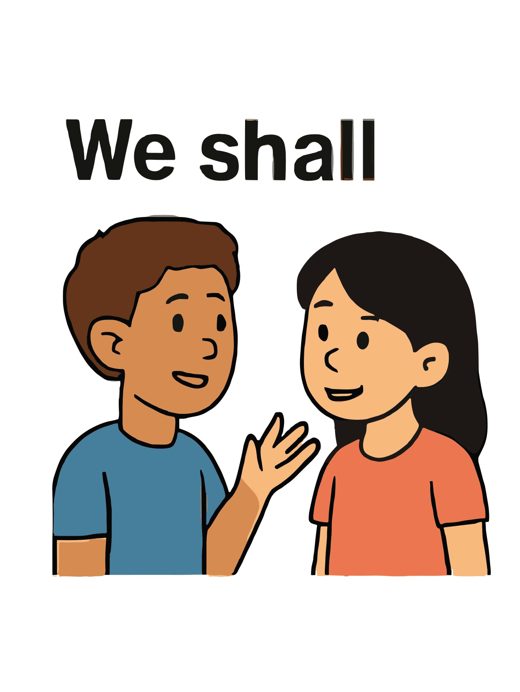
Illustration of two children talking together under the words We shall
“We shall work together.”
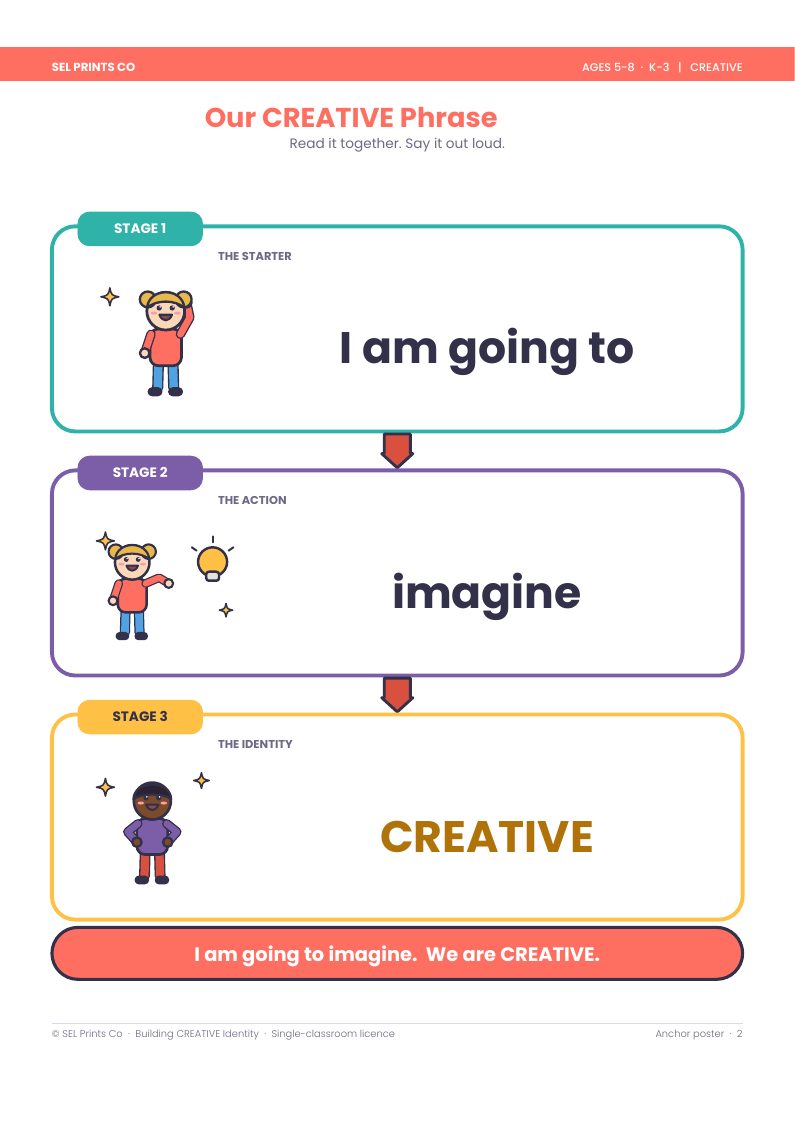
The starter
I will
The action
tell the truth
Who I become
I am honest.
Every virtue in the collection is taught as one arc like this.
The idea

Children behave their way into who they become.

Telling a child to “be kind” asks them to be something they can’t yet see. An arc gives them three small, concrete parts: a way to begin, one thing to do today, and a name for the person they are becoming.

The words are simple on purpose. A five-year-old can say them, and a parent can use the same words at breakfast, in the car and at bedtime.

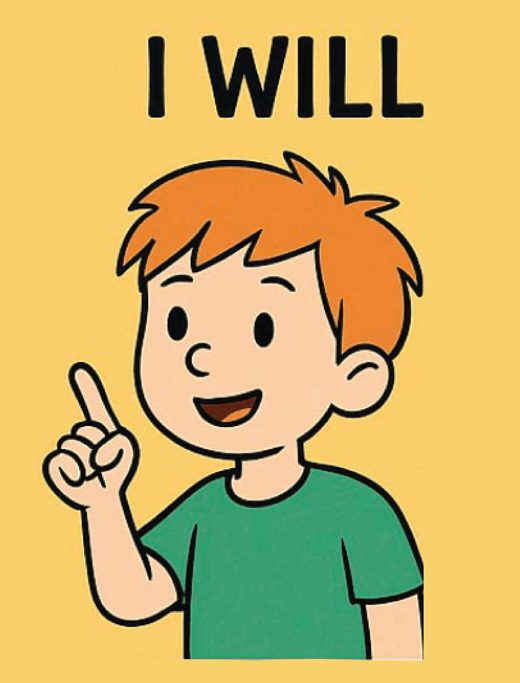
Illustrated card of a boy pointing upward with the words I will

The starterI will · We can · I can be

A short opening that puts the child in charge. It is their choice and their promise.

tell the truth

The actionOne thing to practise today

A visible, everyday behaviour. If you can picture your child doing it, it is specific enough.

I am honest

The identityThe name they get to claim

The action becomes part of who they are, not just something they did once.

The method

Ten gentle steps, from first hearing a virtue to living it.

Each virtue moves through five movements. A step takes ten to fifteen minutes, so one virtue settles in over about two weeks. Nothing is rushed, and any step can be repeated.

i.

Hear it

  1. 1Meet the arc
  2. 2What it means
ii.

See it

  1. 3Spot it
  2. 4Looks, sounds, feels
iii.

Understand it

  1. 5A short story
  2. 6Yes, or not yet?
iv.

Try it

  1. 7What could I do?
  2. 8Practise together
v.

Own it

  1. 9My ready ladder
  2. 10I am honest
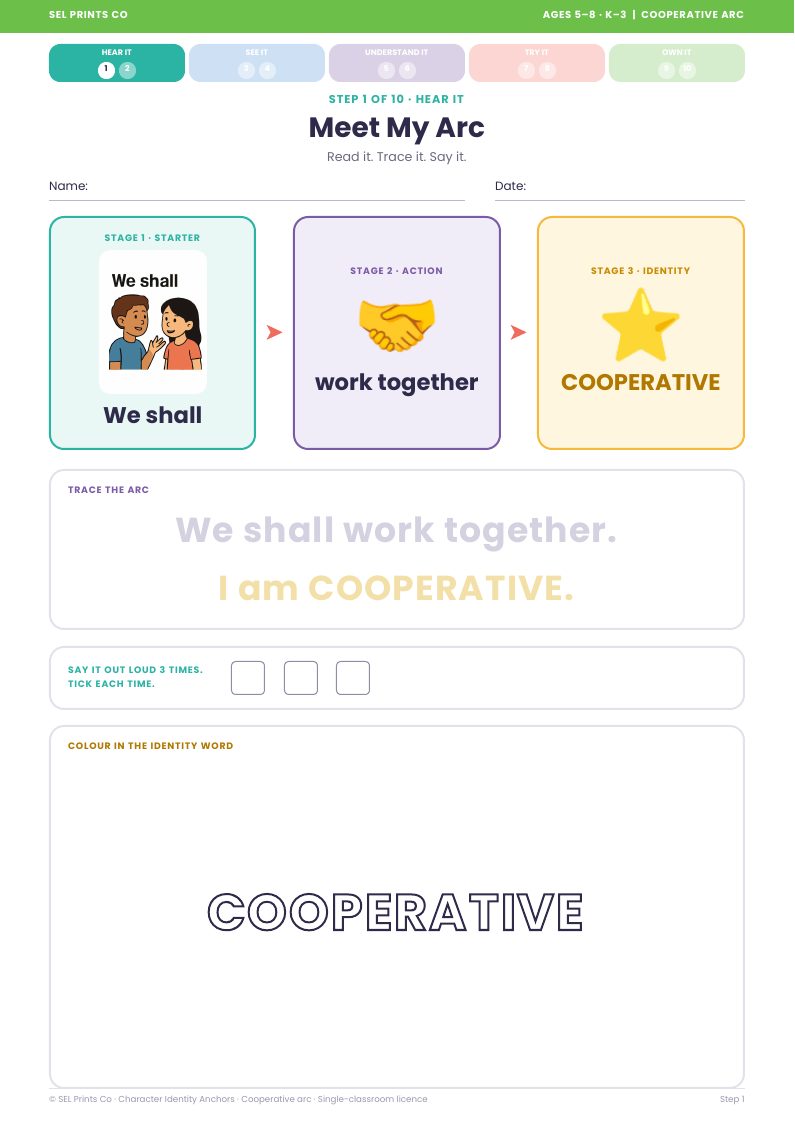
Worksheet: Meet My Arc, with the three stages and a tracing line
Step 1. Meet the arc: trace it and say it aloud.
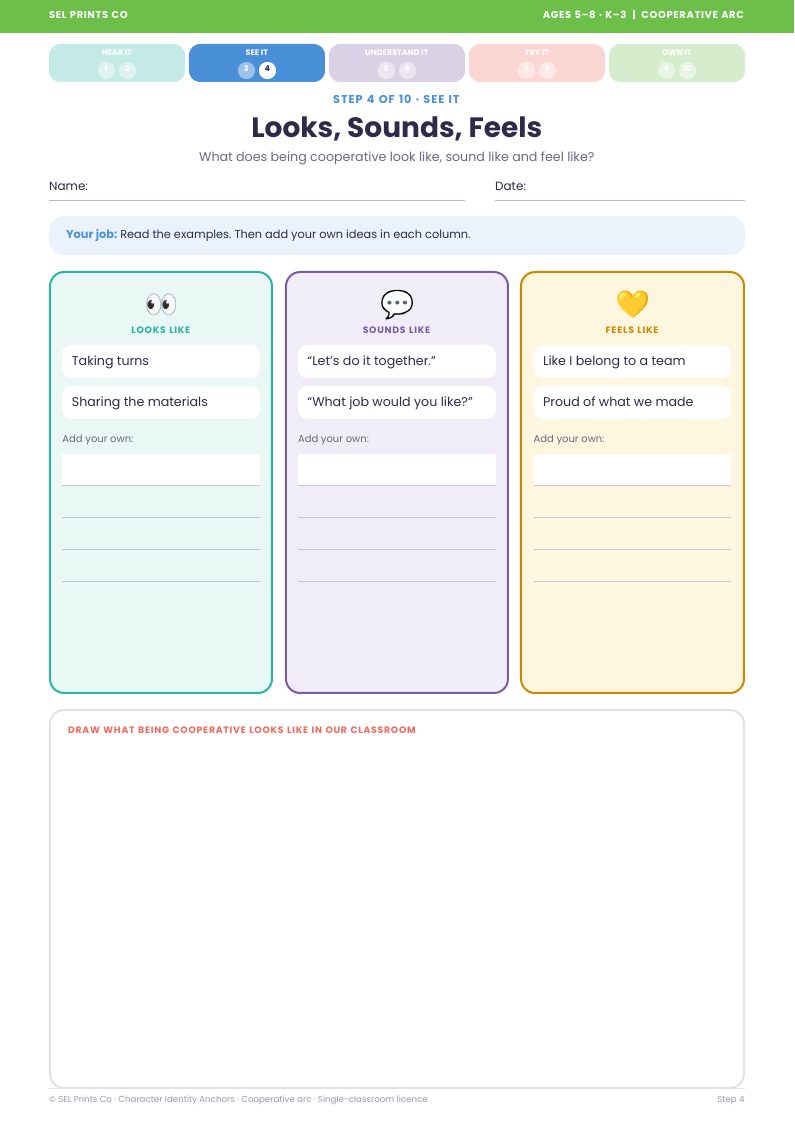
Worksheet: Looks, Sounds, Feels chart
Step 4. What the virtue looks, sounds and feels like.
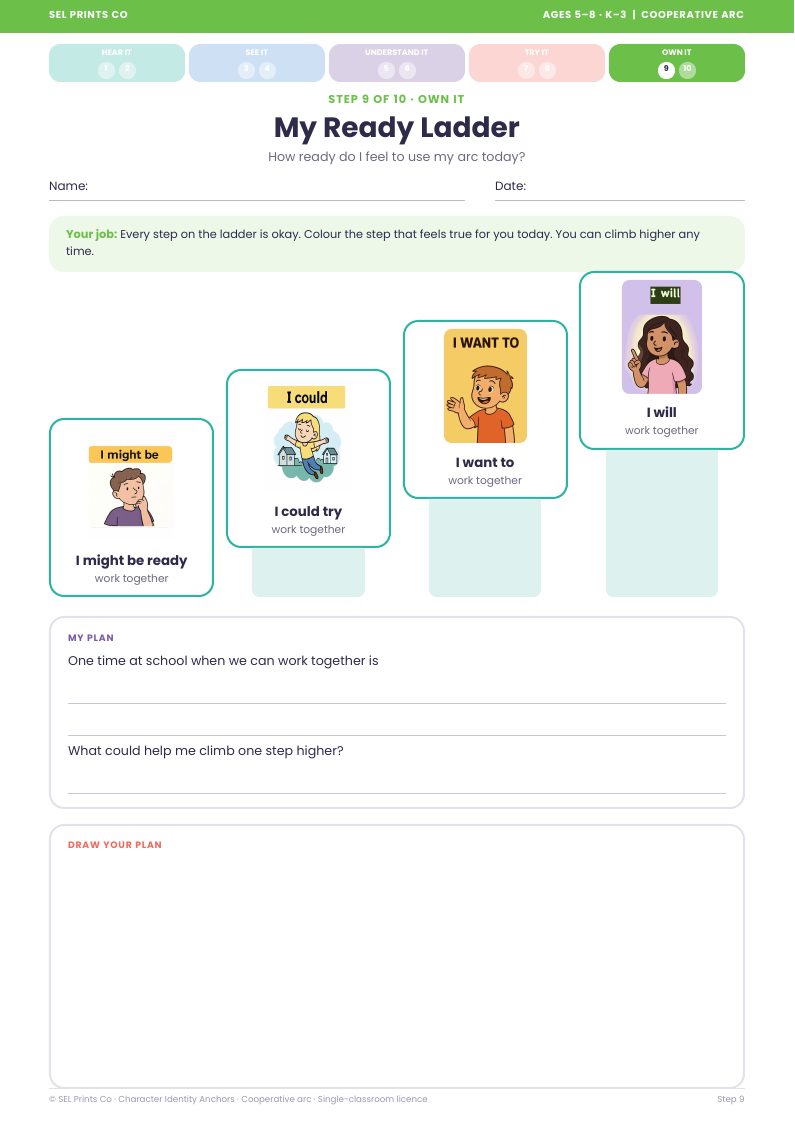
Worksheet: My Ready Ladder with four illustrated starter cards
Step 9. The ready ladder: every rung is a good answer.
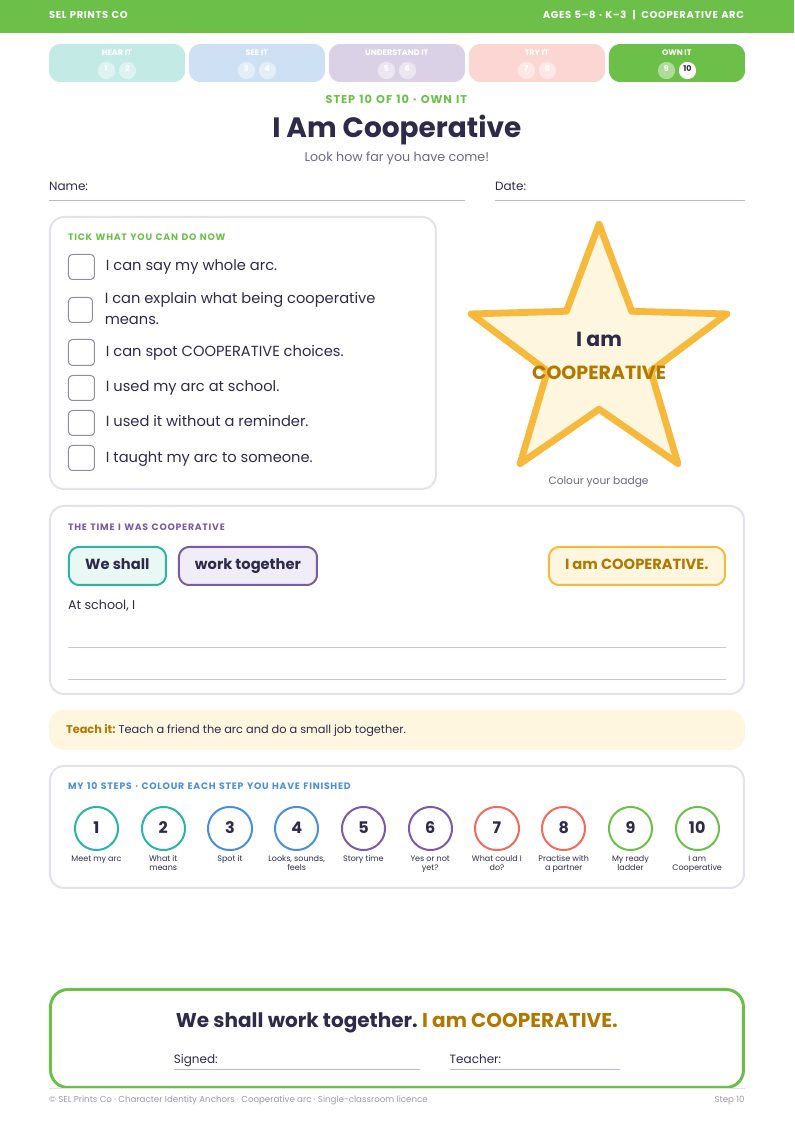
Worksheet: I Am Cooperative, with a badge and checklist
Step 10. A badge and certificate to keep.
The collection

Four parts, each preparing the way for the next.

Feel safe. Find the words. Become. Make it theirs. The collection is printed at home and works on any kitchen table.

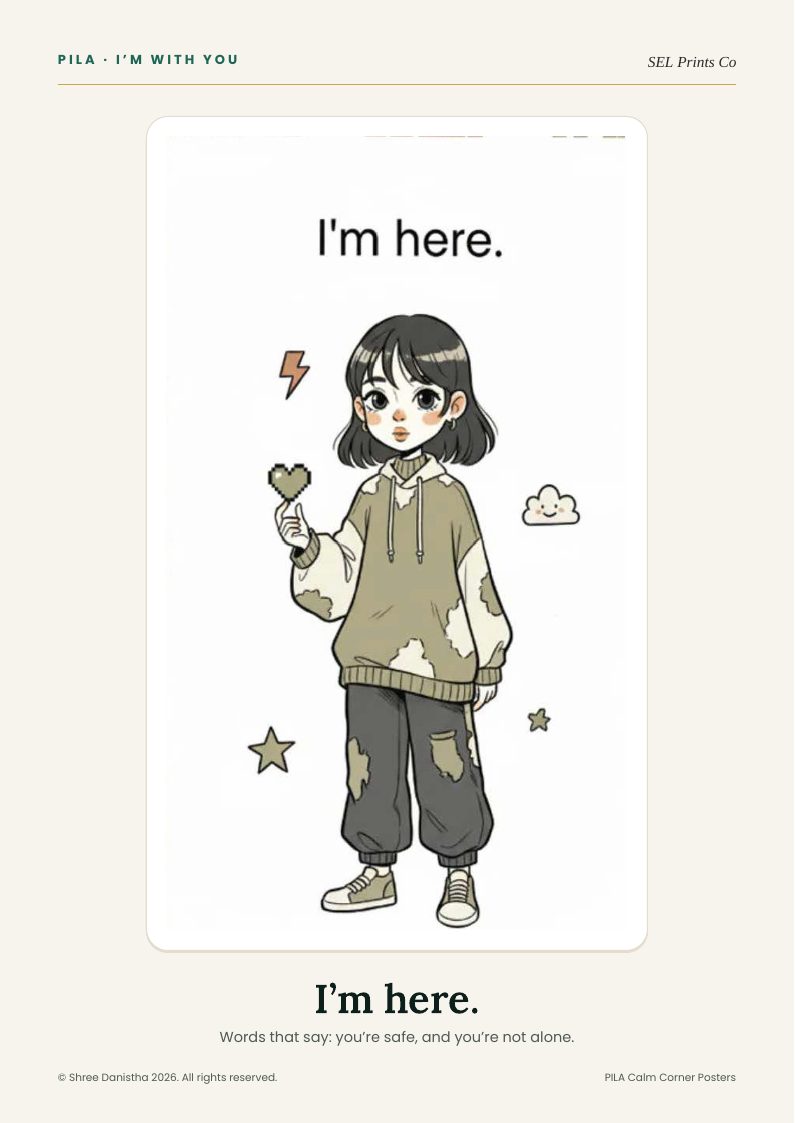
PILA calm corner poster of a child with the words I'm here
The first part

Feel safe

PILA Calm Corner Posters

Gentle phrases a child can point to when feelings are big and words are hard to find. A calm corner comes first, because a child who feels safe is ready to try something new.

22
illustrated calm phrases
22
matching mini cards
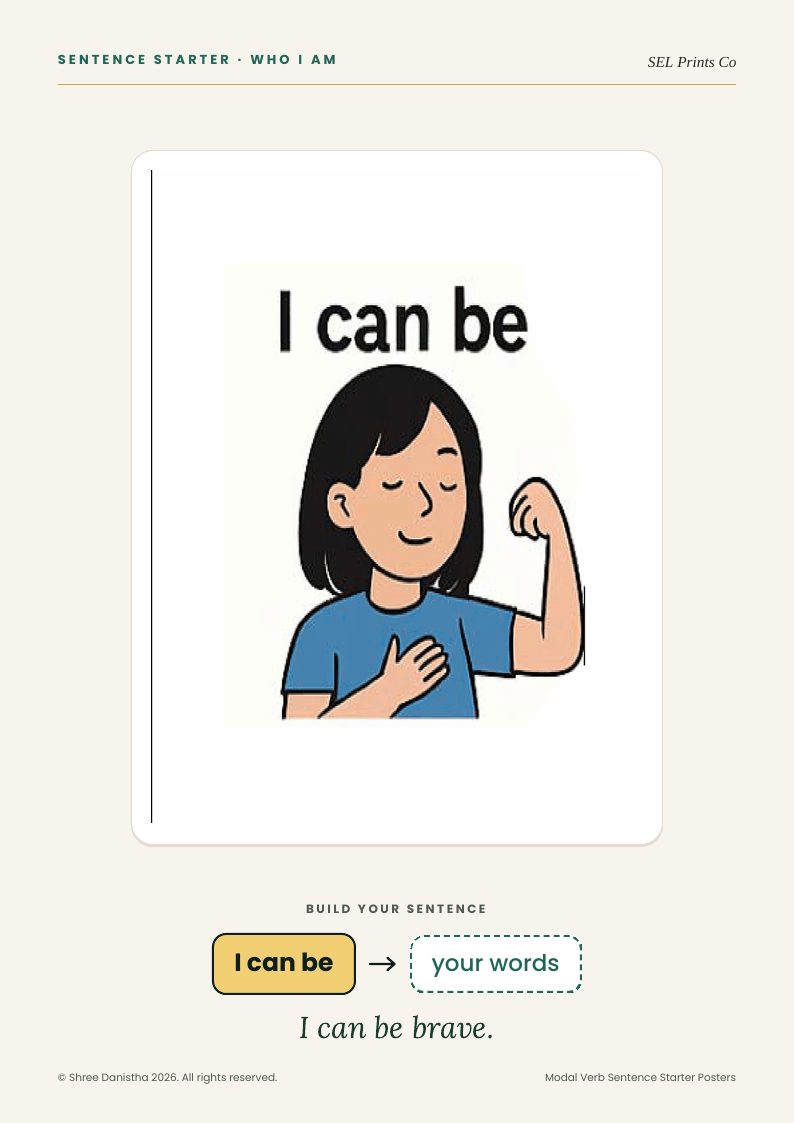
Sentence starter poster: I can be
The second part

Find the words

Sentence Starter Cards & Posters

A ladder of beginnings, from “I might be” to “I will”, so every child has a way to start at their own level of readiness. These cards return in step nine, the ready ladder.

13
illustrated sentence starters
1
“build your sentence” chart, plus mini cards
Anchor poster: We shall, work together, Cooperative
The third part

Become

Character Identity Anchor Posters

One poster for each virtue, showing the whole arc at a glance. Read it together each morning while you are working on that virtue.

10
anchor posters in colour
10
ink-saver versions to colour in
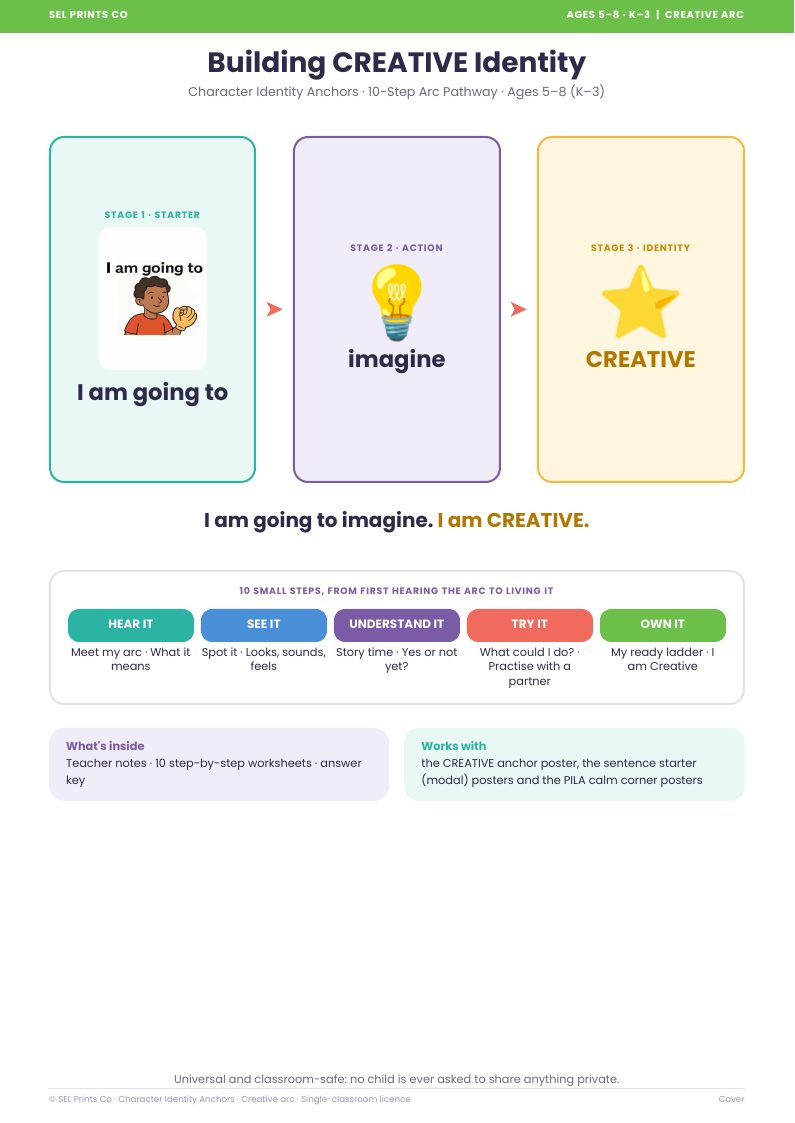
Cover page: Building Creative Identity, ten-step arc pathway
The fourth part

Make it theirs

The Ten-Step Arc Workbooks

A short workbook for each virtue that follows the ten steps of the method, with stories, role-play, a ready ladder and a badge at the end. Every workbook comes with parent notes and an answer key.

100
step-by-step pages across ten virtues
10
sets of parent notes and answer keys
208Printable pages
10Virtues
5 – 8Years of age
A4 · LetterBoth paper sizes
The ten virtues

Each virtue is one arc your child can say.

At home

A small ritual, about fifteen minutes a day.

i

Make a calm corner

Put two or three calm posters somewhere soft and quiet. It is a place to feel better, never a place to be sent.

ii

Choose the virtue of the fortnight

Put its anchor poster on the fridge or by the breakfast table. Read the arc together each morning.

iii

One step a day

Sit together for one page. Younger children can answer aloud while you write for them.

iv

Name it when you see it

“You waited for your turn. That was patient.” Use the same words in the car, at the park and at bedtime.

Private by design
Your child is never asked to share anything private.

Every page uses everyday scenes and shared situations, not personal disclosures. On the ready ladder, every rung is a good answer: it shows how ready a child feels today, never whether they have failed.

1997Teaching since
The author

Written by a teacher, for families.

Character Arc is created by Shree Danistha, a practising teacher since 1997.

Shree has taught in public and private schools across Victoria, Queensland and New South Wales, in classrooms, learning support and student wellbeing. Character Arc brings that experience home: simple language, clear steps, and pages that work for every child, including the ones who find words hardest.

Enquire

Bring Character Arc home.

Leave your details and Shree will be in touch personally about the Early Years Collection and the Years 7–12 collection.

We ask only for a parent’s name and email. We never ask for information about your child.

Coming next · Years 7 to 12

The same arc, grown up for teenagers.

A separate collection for secondary students is being prepared. It keeps the ideas of the Early Years Collection, with language, scenarios and design written for young people aged 12 to 18.

Leave your details above to hear when it opens.

  • PILA postersCalm, steady phrases for the moments when feelings run high.
  • NUANCE worksheetsEmotional and social vocabulary, taught with the precision of a literacy skill.
  • 100 ways to start a conversationOpenings that make it easier to talk, at home and at school.
  • Modal wordsSentence starters that let a young person say how ready they are.
  • Power words and arcsCharacter arcs written for teenagers: what I will do, and who I am becoming.